Kitchen guide · 3 min read
Cast Iron, Without the Myths
A skillet is a heavy pan with a layer of polymerized oil. It is not a family heirloom that will shatter if you wash it.
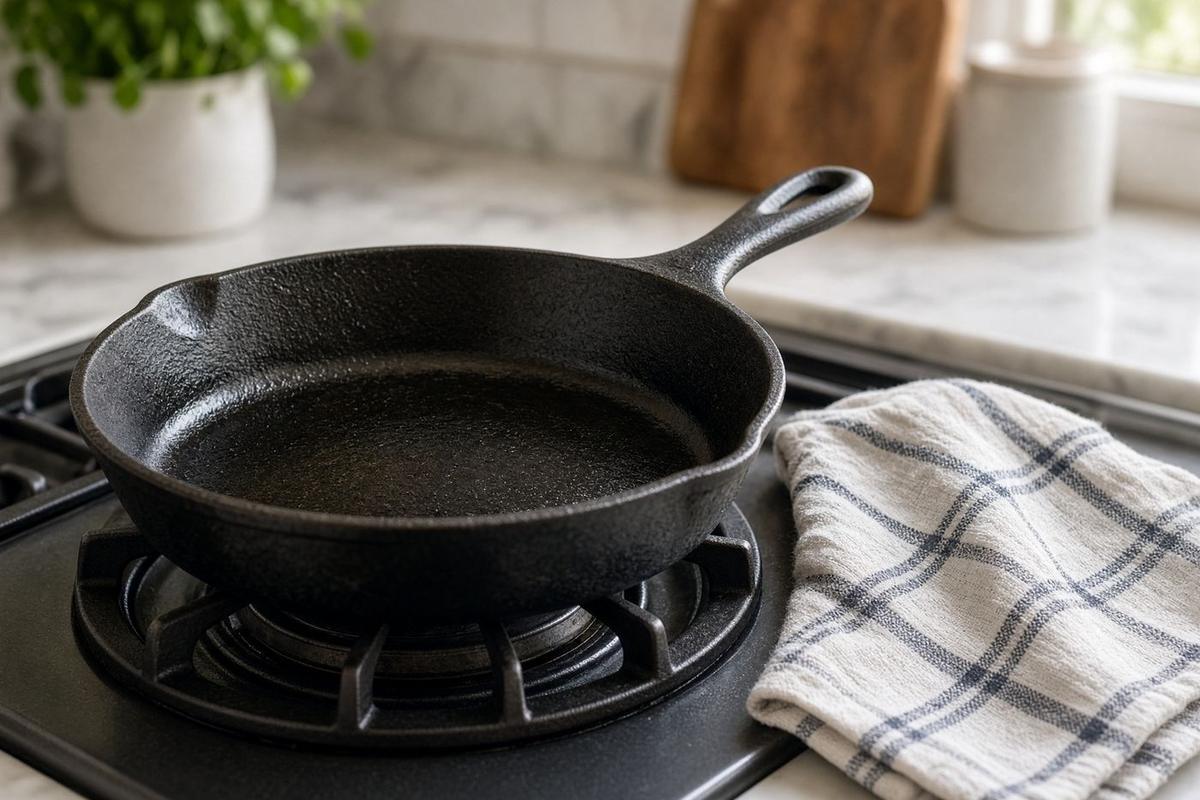
What the black surface actually is
Seasoning is oil that has been heated until it bonds to the iron in a thin, hard film. It is closer to a varnish than to a puddle of grease. A new skillet from a U.S. maker usually arrives with a first coat already on it. Your job is to cook with it and, when the surface looks dry or patchy, to add another thin coat. You do not need a weekend ritual with flaxseed oil and six oven cycles unless you enjoy projects.
Heat the pan, rub a few drops of neutral oil over the inside with a towel until it looks almost dry, and set it in a 450°F oven for an hour. Let it cool in the oven. One round is enough for maintenance. Thick oil pools and turns sticky. Sticky is not rustic. Sticky is oil that never fully set, and it will come off on your cornbread.
The spoonbread, the jalapeño cornbread, and the charred cabbage on this site all use a skillet because the pan holds heat and can move from burner to oven. That is the practical reason. The romance is optional.
Soap is allowed
A drop of dish soap and a soft brush will not strip a seasoned pan. What strips seasoning is a long soak, steel wool on a daily basis, and leaving the pan wet. Wash the skillet while it is still warm, rinse it, and dry it on a burner over low heat for a minute until every drop is gone. Then, if the surface looks dull, wipe on a whisper of oil.
Tomatoes and lemon will not ruin a well-kept pan in the time it takes to cook supper. A long simmer of a very sour sauce can dull the shine. If that happens, dry the pan and give it the one-hour oil coat described above. Do not avoid the peach spoonbread or a pan sauce because of a story you heard about acid. Cook the food. Repair the surface later if it looks patchy.
Rust is the real failure, and rust comes from water left sitting. If you see an orange speck, scrub it off, dry the pan hard, and season that spot. A rusty pan is not trash. It is a pan that stayed wet.
Heat, fat, and sticking
Food sticks when the pan is cold, when the food is wet, or when you move it before a crust forms. For cornbread, the method on this site preheats the skillet in the oven so the batter fries on contact. For cabbage steaks, the pan should be hot enough that a drop of water dances before the oil goes in. For mushrooms, crowding is what makes them steam and cling.
Eggs are a fair test once you care. If eggs slide, the surface is in good shape. If they weld themselves down, use more fat next time and wait longer before you flip. Do not conclude that you need a new pan. You need a hotter pan and a little patience.
Cast iron is slow to heat and slow to cool. On a home stove, give it three or four minutes over medium before you call it ready. On a glass cooktop, drag the pan rather than yank it, and do not drop it. The weight that makes the crust is the same weight that cracks a glass top if you are careless.
What to ignore
Ignore rules that say a skillet must never see a dishwasher, never see soap, never see tomatoes, and never be lent to a friend. The dishwasher is a bad idea because of the long wet heat, and that is the only rule in that list worth keeping. Soap is fine. Tomatoes are fine for a normal cook. Friends can borrow the pan if they dry it.
Ignore seasoning products you do not understand. A cheap neutral oil you already use for roasting is enough. Flaxseed oil can make a hard coat and it can also flake. Bacon fat smells pleasant and goes sticky if it is not heated fully. Pick one fat and repeat the thin-coat method when the pan looks tired.
The skillets in these recipes are tools for browning and for oven finishes. Preheat them when the method says to. Dry them when you are done. That is the entire practice. The rest is stories people tell while the pan heats.