Kitchen guide · 3 min read
How to Shop a Saturday Market
A market is a short season in public. Go with one pan in mind, not with a fantasy of cooking everything you see.
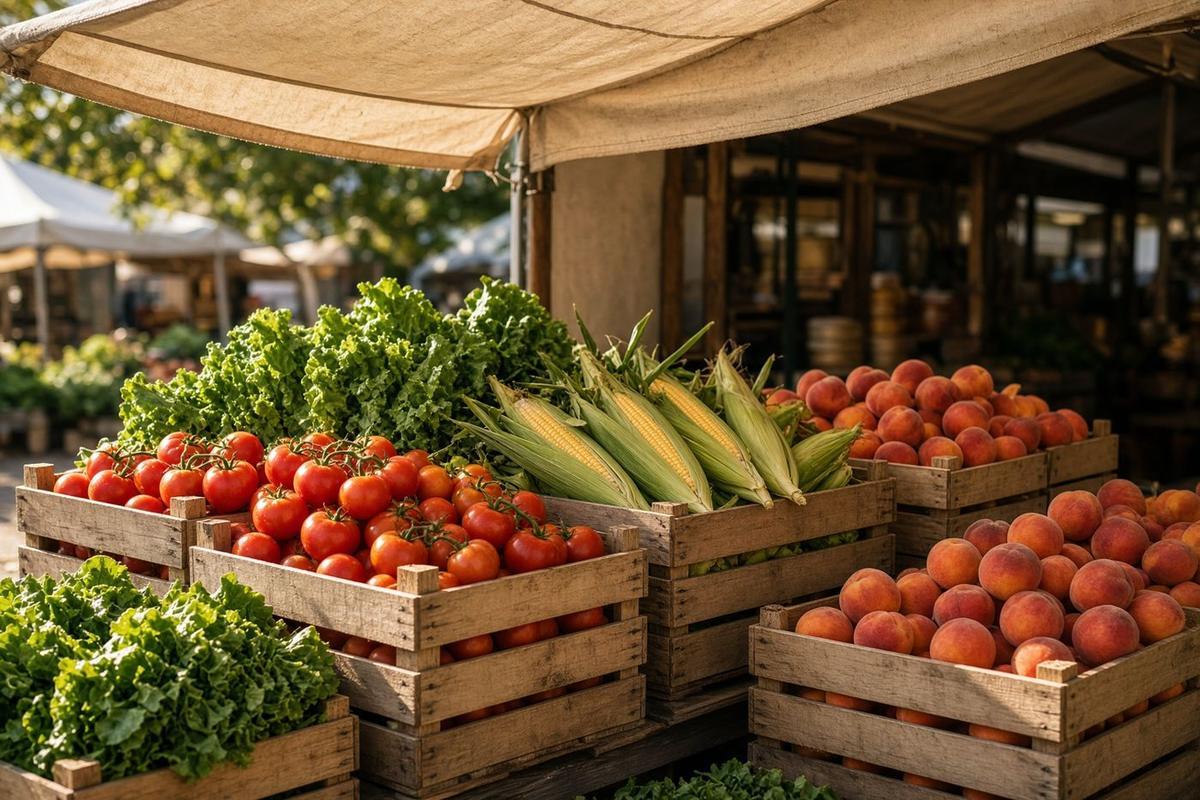
Walk once before you buy
The first loop is for looking. Prices at a Saturday market in the United States are often higher than the grocery store, and they should be, because you are paying a person who grew the food. That only works if you buy things you will cook before they collapse. A first loop lets you see who has ripe fruit and who has fruit that needs three more days.
Decide on one plate from this site before you park. Peach and corn spoonbread means you are hunting peaches that yield slightly and corn with tight green husks. Fennel and lemon chicken means fennel bulbs that feel heavy, with no brown layers, and lemons you can also get at a regular store if the market price is silly. You do not need a different vegetable from every tent.
Cash is still useful at smaller markets. Cards are common in cities. Bring a bag that stands open. A floppy tote dumped on wet grass is how tomatoes bruise before they reach the car.
Fruit and ears, judged by hand
Peaches for the spoonbread should smell like peaches from a step away. A hard peach with no smell will bake into bland chunks. Press gently near the stem. A little give is right. Large bruises mean the fruit is already on its way out; a small soft spot can be cut away if you cook the same day.
Corn should feel full when you run a thumb along the husk. Pull the husk back only if the grower invites it. Silks that are dry and brown at the tips with a still-moist husk are normal. Corn that has been sitting in the sun all morning will taste more starchy by evening. Cook it the day you buy it, or at least cut the kernels off and refrigerate them.
Tomatoes for the farro should be ripe enough to split in a hot pan without a long wait. If the only tomatoes are pale, buy them for later in the week and use a can tonight. Berries for the breakfast bake should be dry in the basket. Wet berries have already started to mold, even if they look bright.
Leaves, roots, and the cabbage steak
Cabbage for steaks should feel dense for its size. A light head is full of air and will shrink to nothing in the skillet. Leave the outer leaves on until you cook. They protect the head in the fridge. Carrots with the tops still attached are fine if the tops look alive. Cut the tops off when you get home or they pull moisture from the roots. The tops can go into a pot of stock if you make stock. If you do not, compost them. Do not let them liquefy in the crisper.
Fennel bulbs should be white to pale green, not brown at the base. A few fronds are a bonus for the chicken pan. If the stalks are long, you are paying for stem. Ask for a bulb trimmed a bit, or just plan to use the stalks in the same roast. They soften.
Greens are where markets get people into trouble. A huge bag of kale looks like virtue and becomes a science project by Thursday. Buy the amount that fits the meals you have already named. If you cannot name the meal, do not buy the bag.
Leave with a plan, not a haul
Before you walk to the car, say the meals out loud. Spoonbread tomorrow. Chicken with the fennel on Wednesday. Farro if the tomatoes are ripe, canned tomatoes if they are not. That sentence is the whole shopping list. Anything that does not fit the sentence stays on the table.
Market food often needs a rinse and a dry when you get home, not a decorative bowl on the counter if the kitchen is warm. Peaches can sit out if you will cook them within a day. Corn should be refrigerated in its husk. Berries should be spread on a towel if they were damp, then boxed. Cabbage and carrots go into the crisper unwashed.
A market is a nice morning. It is not a requirement for cooking the plates on this site. The grocery store sells fennel, cabbage, carrots, and decent peaches in season. Use the market when it is easy and the produce looks alive. Use the store when the Saturday plan falls apart. The skillet does not know the difference.