Kitchen guide · 4 min read
A Sheet-Pan Supper from the Fridge
When the refrigerator looks random, a hot sheet pan is the most reliable pot you own. The rules are spacing, size, and salt.
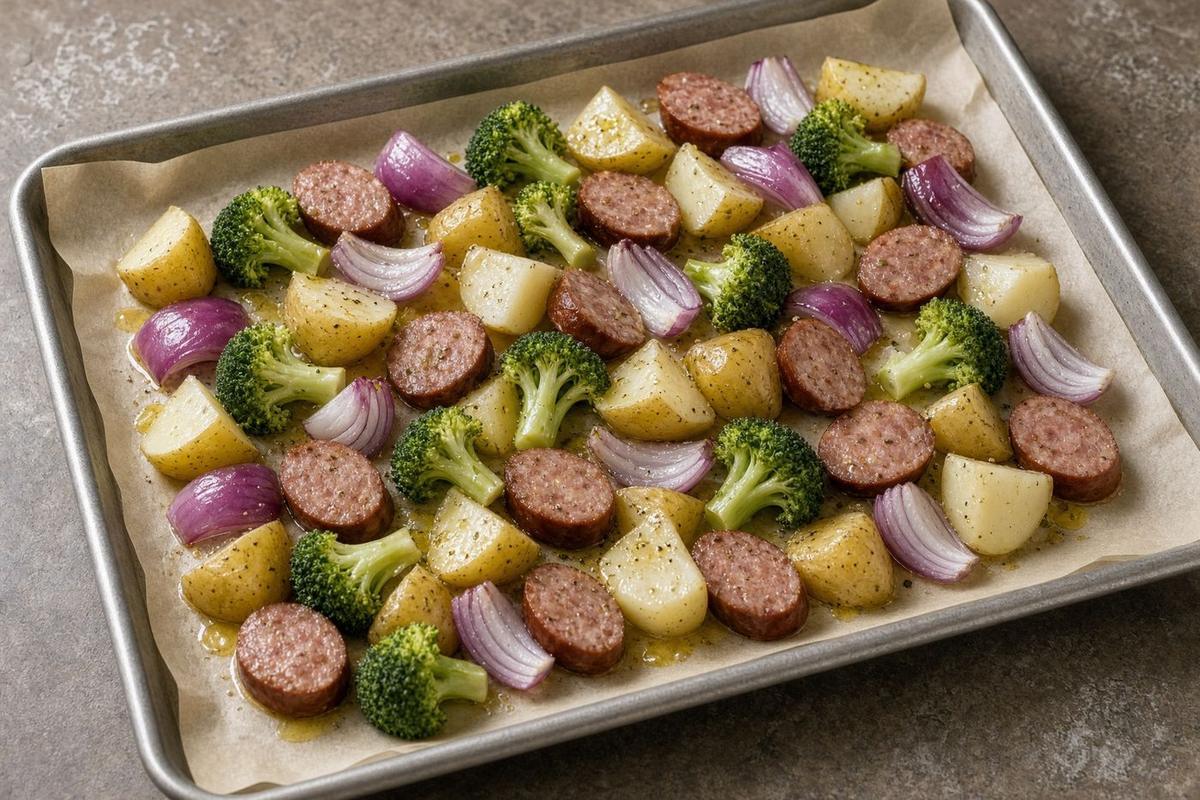
The four piles
Look in the fridge and sort what you see into four piles, even if some piles have one item. A sturdy vegetable that can roast for forty minutes: potato, sweet potato, carrot, winter squash, cabbage wedge. A soft vegetable that only needs twenty minutes: broccoli, fennel, zucchini, pepper, green beans. An allium: onion, shallot, leek, or a few garlic cloves. Something savory: sausage coins, chicken thighs, a tin of chickpeas drained and dried, or a fillet you will add at the end the way the mustard salmon joins the grapes.
If you only have the sturdy pile and the allium, that is still supper. Oil, salt, and a hot oven will do more than another sauce from a jar. If you have none of the savory pile, roast the vegetables and put a fried egg on the plate when the pan comes out. The egg is the something savory.
Do not put wet leaves on the same pan for the full time. Kale and spinach steam, then burn. Add them in the last five minutes if you want them wilted, or keep them off the pan entirely.
Cut for the clock, not for looks
Pieces that roast together need to finish together. Cut potatoes and carrots into chunks about three quarters of an inch. Onion wedges can be larger because onion collapses. Broccoli florets should be bigger than you think, with some stem attached, or they will char before the potato is done. Sausage coins about half an inch thick will brown at the edges in the same window as the potato if they start at the same time.
Dry the pieces. A rinsed potato that goes on the pan wet will steam. A chickpea that is wet will not crisp. Pat things with a towel until they look matte, then toss with olive oil and salt. Pepper can wait until the end so it does not scorch.
Use enough oil that the food glistens, not so much that it puddles. A tablespoon for a crowded corner is a start. Add more if the pan looks chalky. Salt more than you think a raw vegetable needs. Roasting dulls salt. Taste one piece at the end and correct it while the pan is hot.
Heat, racks, and the second addition
Four hundred twenty-five degrees Fahrenheit is the useful temperature for this kind of pan. A lower oven bakes quietly and the food tastes boiled. Put the sturdy vegetables and the onion in first. Roast them for twenty minutes. Then add the soft vegetables and the sausage if you are using it. Roast another fifteen to twenty minutes. Chicken thighs of the sort in the fennel recipe want the full time from the start, skin side up, because they need to render.
Fish and thin fillets do not survive forty minutes. Put them on the pan when the vegetables have about twelve minutes left, the way the salmon sits beside the grapes. Shrimp need even less. If the only pan is already full, cook the shrimp in a skillet and spoon them on top. There is no prize for using exactly one vessel.
Space is the other heat source. Food in a single layer browns. Food in a pile steams. If the sheet looks tight, use two sheets and swap their racks halfway. A packed pan is the main reason people decide they cannot roast.
A finish that is not a recipe
When the pan comes out, decide if it tastes flat. A squeeze of lemon, a spoon of vinegar, or a pat of butter stirred through the onions will wake it up. Herbs go on after the oven, not before, or they blacken. The walnut butter from the cabbage plate is a good finish for plain roasted vegetables if you already made it. The pepper relish from the shrimp plate is another. You are allowed to reuse a finish.
Leftovers from a sheet pan are tomorrow's lunch if you keep the crisp things separate from anything sauced. Cold roasted potatoes are pleasant with an egg. Cold roasted broccoli is less pleasant and wants the skillet again for a few minutes. Chicken thighs reheat covered, then uncovered, as the fennel recipe says.
This is a method for using what you have. It is not a challenge, a reset, or a rule about how often you should cook. If the fridge is truly empty, the pantry note is the page to read instead. If the fridge is chaotic, heat the oven, cut things the same size, and salt them. That sequence has saved more Wednesday nights than a new gadget.