Kitchen guide · 4 min read
A Weeknight Pantry for a U.S. Kitchen
A pantry is a set of decisions you already made, so Tuesday does not require a second trip to the store.
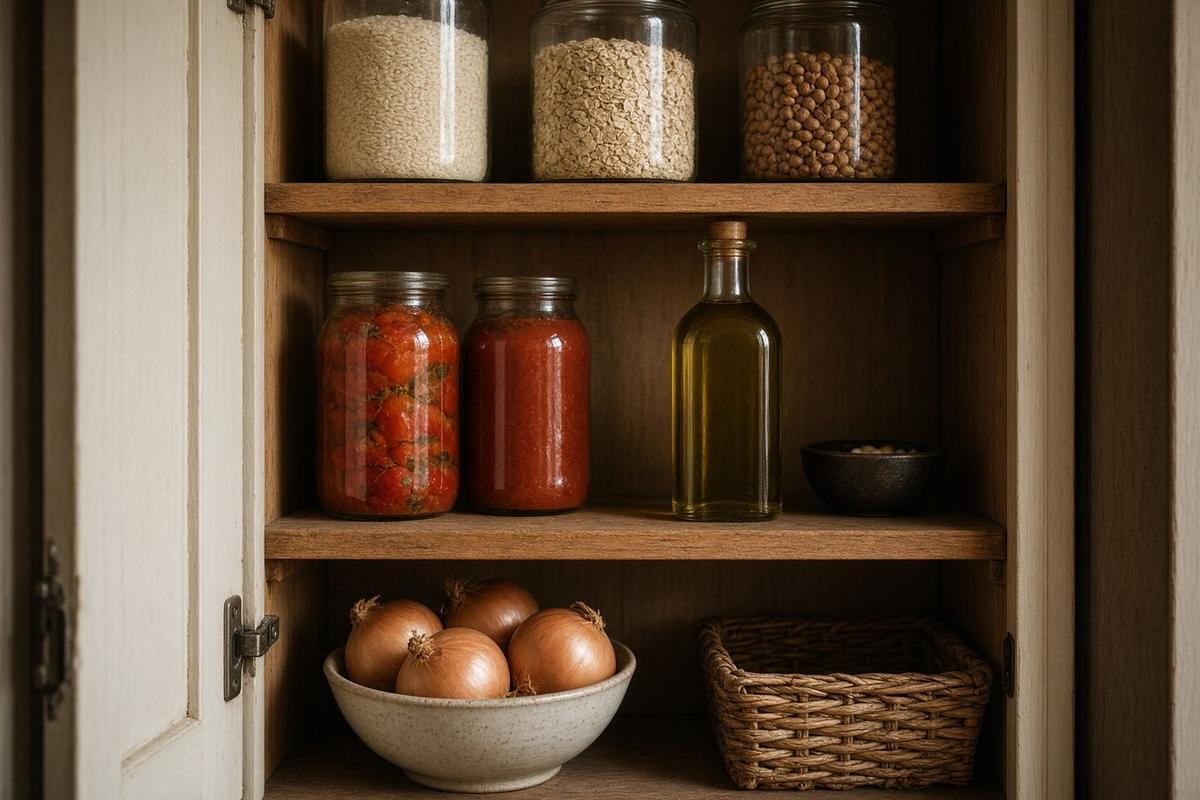
Start with what you will actually boil
Most weeknight trouble is not a missing technique. It is a cupboard full of ingredients that do not know one another. A bag of obscure grains sits beside three hot sauces and no onion. The fix is boring on purpose. Pick a short list of foods you already know how to cook, buy them in amounts that fit your shelves, and replace them when the jar is half empty rather than when it is bare.
In a typical American grocery store the useful backbone is plain. Long-grain rice, rolled oats, stone-ground or quick grits, pearl barley or pearled farro, dried pasta in one wide shape and one small shape, canned tomatoes, canned beans in two varieties, and a jar of something salty such as capers or olives. That set will carry the plates on this site without a special shop.
Skip the fantasy of a perfectly styled shelf. Clear jars are pleasant, but the food inside matters more than the glass. If you decant, write the date on a piece of tape in your own handwriting. Undated flour and grain are how pans of baked oats go stale before you notice.
The cold shelf is part of the pantry
Treat the refrigerator door as a second pantry with a shorter life. Keep unsalted butter, eggs, a block of cheddar, milk or buttermilk, and a hard grating cheese if you use it. Lemons live better in the fridge than in a bowl on a warm counter in July. A jar of Dijon and a bottle of hot sauce belong at eye level so you remember they exist.
Onions, garlic, and potatoes want air and darkness, not the cold drawer, unless your kitchen is so hot that the onions sprout in a week. Sweet potatoes can sit in a basket for several days. Check them when you put the kettle on. Soft spots are a sign to cook them that night, which is exactly how the black bean pot starts.
Herbs are the item people buy and abandon. If you will not use a whole bunch of cilantro, do not buy it for a single garnish. Parsley is the more forgiving bunch on this site. Flat-leaf stems can be chopped into farro, barley, or a pan sauce. When the bunch wilts, it is done. Do not build a recipe around herbs you cannot see.
A restock that fits one basket
Once a week, look at five questions before you leave the house. Is there a grain? Is there a tin of tomatoes and a tin of beans? Is there an allium? Is there fat for the pan, meaning oil and butter? Is there something fresh that will spoil, such as greens, fruit, or a pepper? If any answer is no, that item goes in the basket before snacks do.
American package sizes are awkward. A two-pound bag of rice is enough. A five-pound bag is a commitment unless you cook rice several times a week. Canned beans in fifteen-ounce tins match the pot on this site. Dried beans are cheaper and take a plan you may not have on a Wednesday, so keep them only if you already soak beans on purpose.
Spices should be few and fresh enough to smell. Smoked paprika, cumin, black pepper, dried oregano, and a cinnamon you actually like will cover the plates here. Buy small tins. A jar of paprika that has sat since a previous apartment tastes like dust, and dust will not save a pot of sweet potato.
How the plates on this site use the shelf
Tomato butter farro needs farro, butter, and a pint of tomatoes. If the tomatoes are the canned kind, drain them a little and let them cook longer than the cherry tomatoes in the written method. Bay shrimp over pepper grits needs grits and milk; the shrimp is the fresh purchase, not a pantry resident. Jalapeño cornbread needs cornmeal and buttermilk. If you only keep regular milk, sour it with a teaspoon of vinegar as the cornbread note says, and do not pretend it is the same as cultured buttermilk. It is close enough for a Tuesday.
Build one overlap meal in your head so the pantry is not abstract. Rice plus an egg plus a scallion is supper. Farro plus butter plus whatever tomato you have is supper. Grits plus cheddar plus a fried egg is supper. When the shelf can do those three things without a list, you are stocked. Everything else is a variation.
None of this is a program. There is no score for a tidy cupboard and no prize for cooking from the pantry seven nights in a row. The only test is whether you can start a pan at six without driving anywhere. If the answer is yes most weeks, the shelf is doing its job.