Weeknight
Sheet-Pan Chicken with Fennel and Lemon
Thighs stay on the bone so they do not dry out while the fennel softens and the lemon halves collapse into a sharp sauce.
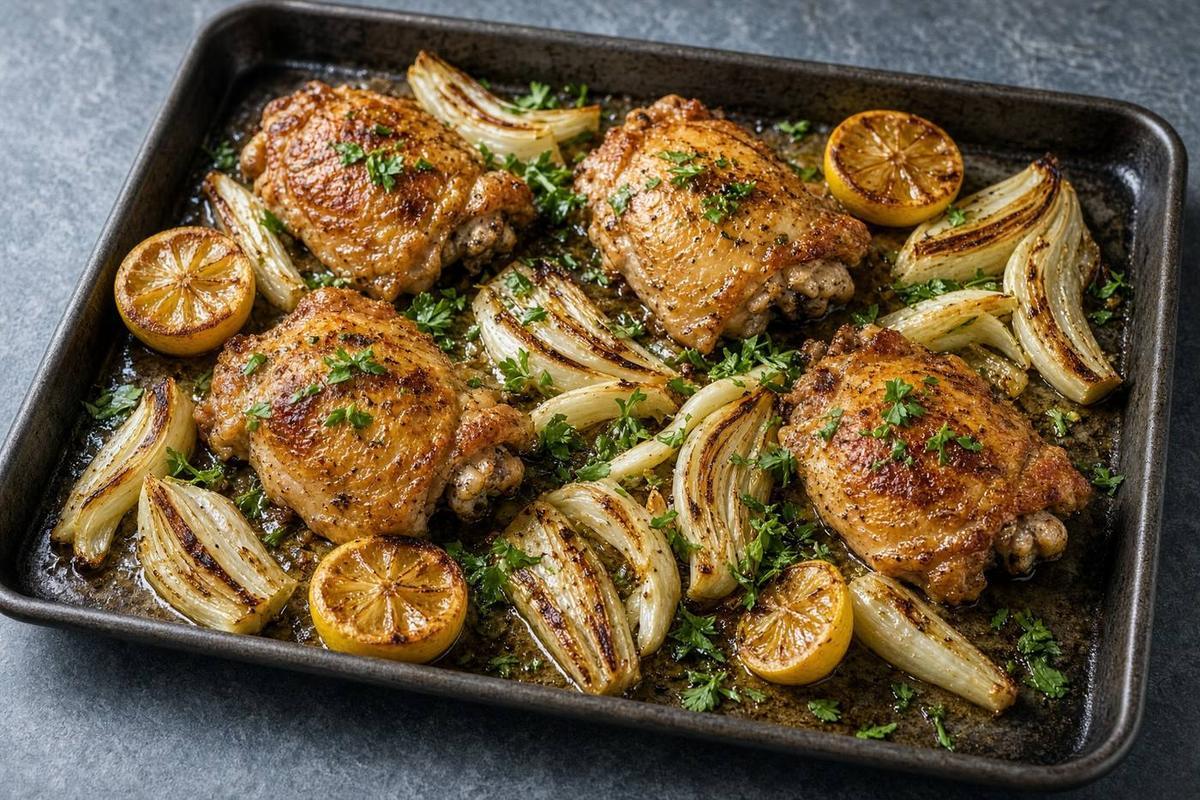
Allergens: No common allergen is required in this mix. Olive oil and parsley are the finish; skip the parsley if your bunch ever shares a board with nuts.
Ingredients
- 8 bone-in, skin-on chicken thighs (about 3 pounds)
- 2 fennel bulbs, stalks trimmed, bulbs cut into 1-inch wedges
- 1 lemon, halved, plus 1 teaspoon grated zest from a second lemon
- 3 tablespoons olive oil
- 4 garlic cloves, smashed
- 1 teaspoon kosher salt
- 1/2 teaspoon black pepper
- 1 teaspoon dried oregano
- 1/4 cup chopped flat-leaf parsley
Method
- Set a rack in the upper third and heat the oven to 425°F. Line a heavy sheet pan with parchment if you dislike scrubbing, or leave it bare for deeper browning.
- Pat the thighs dry. Toss them with the fennel, smashed garlic, oil, salt, pepper, oregano, and zest until every surface looks slick.
- Spread the fennel in one layer and set the thighs skin side up on top, with a little space between them. Nestle the lemon halves cut side up in the gaps.
- Roast 35 minutes. If the skin is pale, move the pan to the top rack for 5 more minutes. The fennel should be tender when pierced and the juices around the pan should look glossy, not watery.
- Rest the pan 5 minutes. Squeeze the roasted lemon halves over the thighs, then scatter parsley. Taste a fennel edge and add a pinch more salt if the pan juices taste flat.
Storage
Cool the pieces, then box the meat and fennel together with the pan juices. Refrigerate up to three days. Reheat covered at 350°F until the meat is hot, then uncover for a few minutes to refresh the skin.
Kitchen notes
Fennel cores can stay in the wedges. They soften and keep the pieces from falling apart. If your bulbs still have fronds, save a small handful to chop with the parsley; they taste greener than the bulb.
A sheet pan rewards spacing. Crowded thighs steam and the skin stays rubbery, so use two pans if your single sheet looks tight. The second pan can go on a lower rack and swap places halfway if your oven runs hot at the top.
Kitchen notes, not medical advice. These pages describe how to cook food. They do not diagnose, treat, or promise any health result. If you have an allergy or need a specific eating pattern, follow the advice of a qualified professional.