Weeknight
Baked cod with tomatoes, olives, and capers
Mild white fish baked on top of bursting cherry tomatoes, briny olives, and capers. The pan juices are the sauce, so serve it with crusty bread, rice, or orzo.
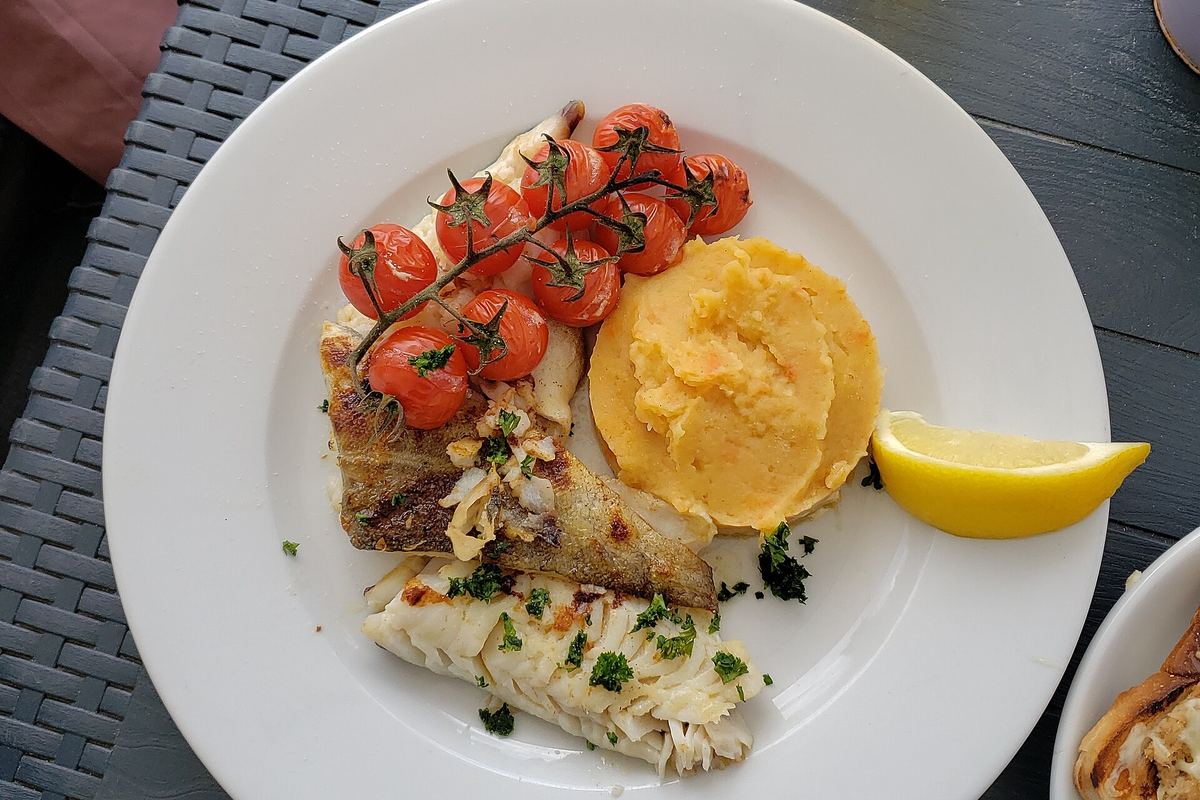
Allergens: Contains fish. Free of the other major allergens as written.
Ingredients
- 4 skinless cod fillets (about 6 oz each), about 1 inch thick
- 2 pints cherry or grape tomatoes
- 1/3 cup pitted Kalamata olives, halved
- 2 tablespoons capers, drained
- 3 cloves garlic, thinly sliced
- 3 tablespoons olive oil, divided
- 1/2 teaspoon dried oregano
- 1/4 teaspoon red pepper flakes
- 3/4 teaspoon kosher salt, divided
- 1/4 teaspoon black pepper
- 1 lemon, half juiced and half cut into wedges
- 2 tablespoons chopped parsley
Method
- Heat the oven to 425°F. In a 9-by-13-inch baking dish, toss the tomatoes, olives, capers, garlic, 2 tablespoons olive oil, oregano, red pepper flakes, and 1/2 teaspoon salt.
- Roast the tomato mixture for 10 minutes, until the tomatoes begin to soften and a few have split.
- Meanwhile, pat the cod dry with paper towels. Season both sides with the remaining 1/4 teaspoon salt and the black pepper.
- Take the dish out, stir the tomatoes, and nestle the fillets on top. Drizzle the fish with the remaining tablespoon of oil and the lemon juice.
- Bake 10 to 12 minutes, until the fish is opaque and flakes easily with a fork; it should read 145°F in the thickest part. Thinner fillets will be done sooner.
- Scatter with parsley and serve from the dish with lemon wedges, spooning the tomatoes and juices over each piece.
Storage
Best eaten the day it is made. Leftovers keep, covered, in the refrigerator for 1 to 2 days; rewarm gently in a low oven so the fish does not dry out.
Kitchen notes
Roasting the tomatoes first gives them a head start, so they are soft and jammy by the time the fish is cooked. If you add everything at once, the fish overcooks before the tomatoes collapse.
Any firm white fish works: haddock, halibut, pollock, or hake. Adjust the time to the thickness of the fillet rather than the weight; a rule of thumb is about 10 minutes per inch at this temperature.
If your olives and capers are very salty, cut the salt in the tomato mixture to 1/4 teaspoon and taste the juices at the end.
Kitchen notes, not medical advice. These pages describe how to cook food. They do not diagnose, treat, or promise any health result. If you have an allergy or need a specific eating pattern, follow the advice of a qualified professional.