Weekend
Cider-Braised Pork with Apples
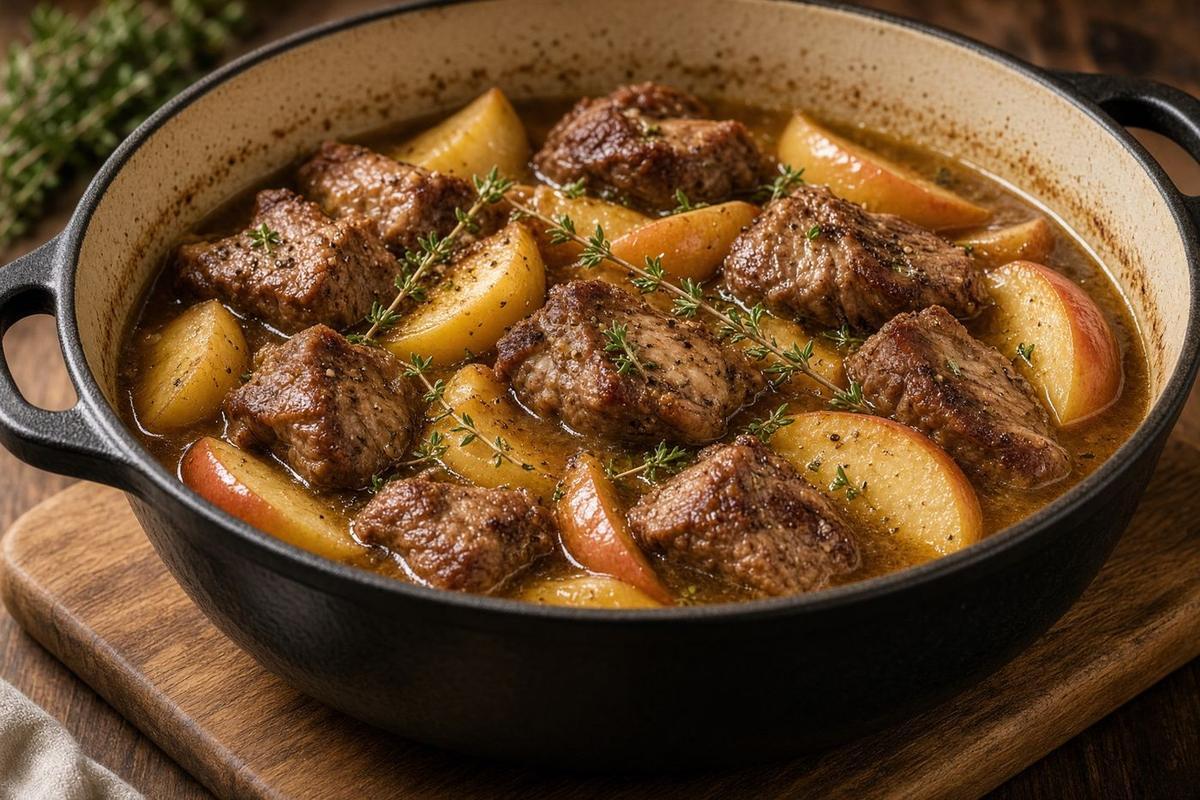
Shoulder cooks low and slow in cider until you can pull it with a spoon, while apple wedges join near the end so they keep their shape.
Allergens: The pot itself has no gluten, egg, or nut. Cider brands differ; read the bottle if you avoid sulfites.
Ingredients
- 3 1/2 pounds boneless pork shoulder, cut into 4 large chunks
- 2 teaspoons kosher salt
- 1 teaspoon black pepper
- 2 tablespoons neutral oil
- 1 large onion, sliced
- 2 cups apple cider (sweet cider, not vinegar)
- 1 tablespoon apple cider vinegar
- 4 thyme sprigs
- 2 firm apples, cored and cut into wedges
- 1 tablespoon butter
Method
- Heat the oven to 325°F. Pat the pork dry and season it on all sides with salt and pepper. Heat the oil in a Dutch oven over medium-high heat and brown the chunks in two batches, about 4 minutes per side. Set the meat on a plate.
- Lower the heat. Cook the onion in the same pot with a pinch of salt until it softens and picks up the browned bits, about 6 minutes. Pour in the cider and vinegar and scrape the bottom clean.
- Return the pork and any juices. Tuck in the thyme. The liquid should come about halfway up the meat; add a splash of water if the pot looks shy. Bring it to a simmer.
- Cover and bake 2 hours 15 minutes. Uncover, nestle the apple wedges around the meat, and bake 25 minutes more, until the pork yields easily to a fork and the apples are tender but not mush.
- Lift the pork and apples to a platter. Set the pot over medium heat, stir in the butter, and reduce the liquid for 5 to 8 minutes until it lightly coats a spoon. Spoon that sauce over the meat. Pull the thyme stems out before serving.
Storage
Refrigerate meat, apples, and sauce together for up to four days, or freeze portions for two months. Rewarm gently on the stove with a spoon of water so the sauce loosens.
Kitchen notes
Sweet cider, the kind sold in the juice aisle, keeps the pot mild. Hard cider also works and tastes a little sharper; use the same 2 cups. Do not swap in cider vinegar for the whole amount or the braise will taste pickled.
This is the plate to start when you will be home but not standing at the stove. Check the liquid once halfway through. If it has cooked down to a glaze too early, add half a cup of water, cover again, and carry on.
Kitchen notes, not medical advice. These pages describe how to cook food. They do not diagnose, treat, or promise any health result. If you have an allergy or need a specific eating pattern, follow the advice of a qualified professional.